



Adenosine Receptor
P1 receptor
Adenosine receptors (ARs) comprise a group of G protein-coupled receptors (GPCR) which mediate the physiological actions of adenosine. To date, four AR subtypes have been cloned and identified in different tissues. These receptors have distinct localization, signal transduction pathways and different means of regulation upon exposure to agonists. A key property of some of Adenosine receptors is their ability to serve as sensors of cellular oxidative stress, which is transmitted by transcription factors, such as NF-κB, to regulate the expression of ARs. The importance of Adenosine receptors in the regulation of normal and pathological processes such as sleep, the development of cancers and in protection against hearing loss will be examined.
Adenosine Receptor Isoform Specific Products
All Product Categories
-
Adenosine Receptor Inhibitors
(41)
View all products
-
Adenosine Receptor Agonists
(119)
View all products
-
Adenosine Receptor Antagonists
(203)
View all products
-
Adenosine Receptor Activators
(9)
View all products
-
Adenosine Receptor Modulators
(11)
View all products
-
Adenosine Receptor Degrader
(1)
View all products
-
Adenosine Receptor Ligands
(13)
View all products
-
Adenosine Receptor Related Products (428)
Related Products (428)

-
Antibodies (2)
-
Adenosine Receptor Isoform Comparison
-
TAT-GluA2 3Y
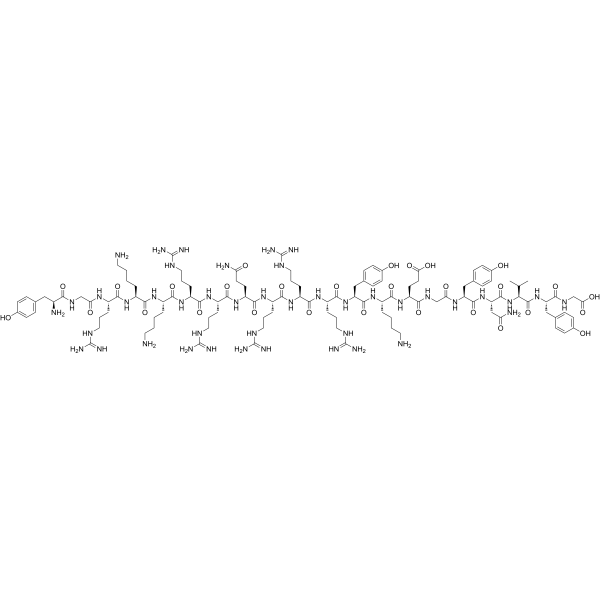 0 ImagesTAT-GluA2 3Y is a blood-brain barrier-permeable AMPA receptor inhibitory peptide that crosses cell membranes via the HIV-1 TAT protein domain. TAT-GluA2 3Y blocks the endocytosis of AMPA receptors, including the internalization of GluA1/GluA2 subunits, by disrupting interactions with the AP2, Brag2 and Syt3-GluA2 complexes, while also inhibiting long-term depression. TAT-GluA2 3Y blocks hypoxia-mediated AMPAR internalization, alleviates A1R-induced persistent synaptic inhibition, and reduces cerebral ischemic volume, neurological deficits and spatial memory deficits. TAT-GluA2 3Y blocks the effect of NLRP3 deficiency on fear generalization, inhibits amphetamine-induced behavioral/neurochemical sensitization, weakens the unconditioned stimulus-conditioned stimulus association of morphine, and promotes the extinction of morphine CPP. TAT-GluA2 3Y can be used in studies related to fear generalization, ischemic stroke, hypoxia, drug addiction and opioid addiction.
-
CV1808
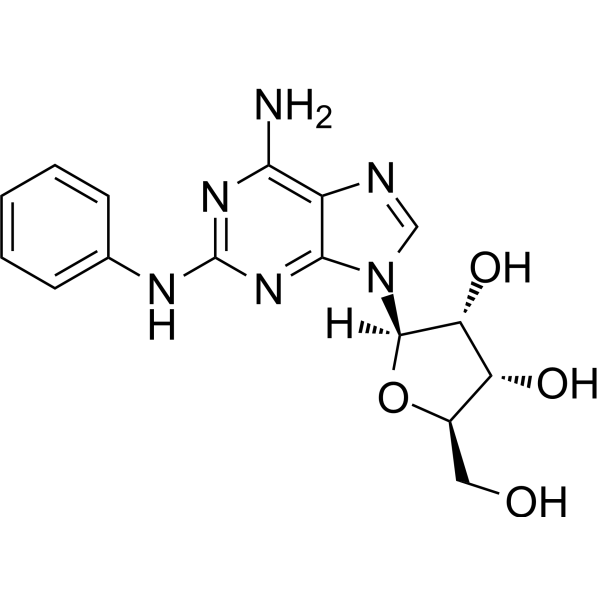 0 ImagesSynonyms: 2-PhenylaminoadenosineCV1808 (2-Phenylaminoadenosine) is a non-selective A2 adenosine receptor (A2 AR) agonist with Kis of 76 and 1450 nM for A2A and A3 adenosine receptor subtypes, respectively.
-
2'-MeCCPA
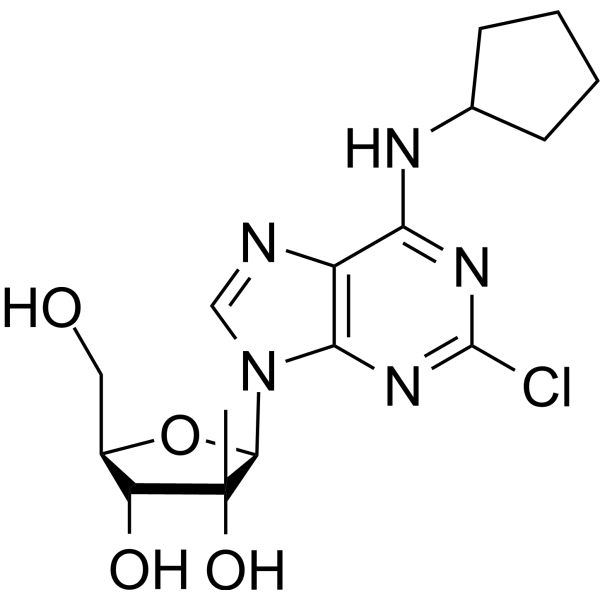 0 ImagesSynonyms: 2-Chloro-N-cyclopentyl-2′-C-methyladenosine2'-MeCCPA is a potent and selective A1 adenosine receptors (A1AR) agonist. 2'-MeCCPA efficiently inhibits cAMP modulation in both direct pathway medium spiny neurons (dMSNs) and indirect pathway medium spiny neurons (iMSNs).
-
9-Ethyladenine
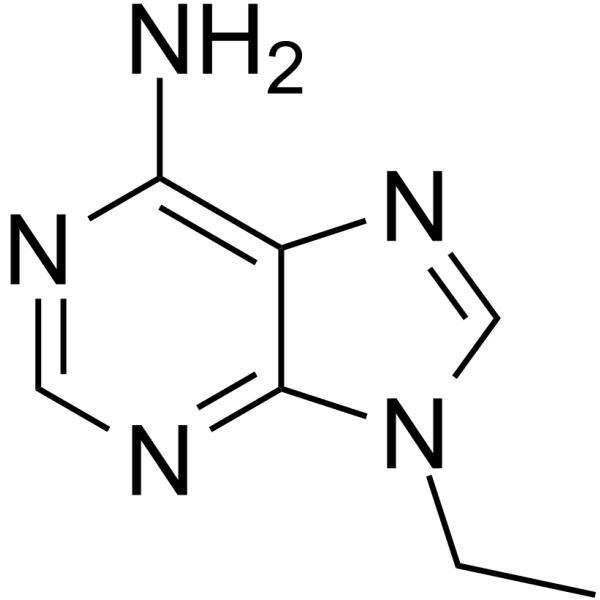 0 Images9-Ethyladenine is a precursor of competitive antagonists of adenosine receptors (A1, A2, A3), with no significant inhibitory effect on adenine phosphoribosyltransferase (APRT). 9-Ethyladenine derivatives have high affinity and selectivity for A1 (Ki=27 nM), A2A (Ki=46 nM), and A3 (Ki=86 nM) receptors. 9-Ethyladenine does not inhibit brain APRT activity, can be used in the study of adenosine receptor-related diseases (such as nervous system diseases) models.
-
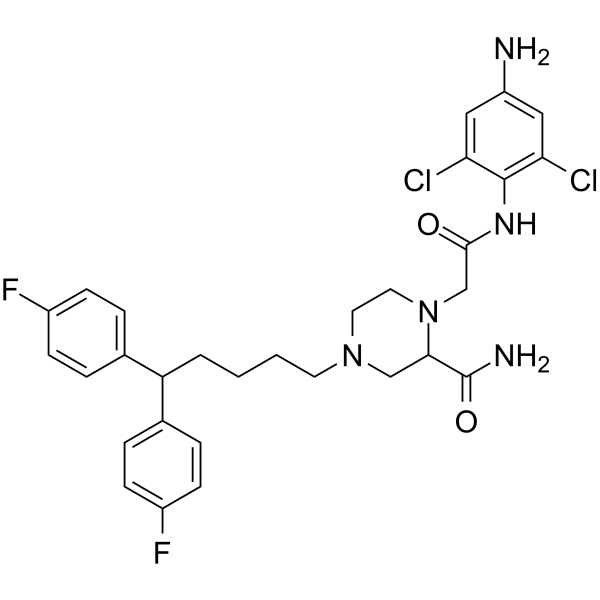
Evodenoson
 0 ImagesSynonyms: ATL 313; DE 112Evodenoson is a selective agonist of the A2A adenosine receptor. Evodenoson’s primary actions include reducing inflammatory responses, decreasing intestinal fluid secretion, edema, tissue damage, and neutrophil infiltration induced by Clostridium difficile toxin A. Evodenoson’s protective effect is achieved by reducing myeloperoxidase (MPO) and adenosine deaminase (ADA) activities, and by lowering the production of tumor necrosis factor-alpha (TNF-α).
-
Norisoboldine hydrochloride
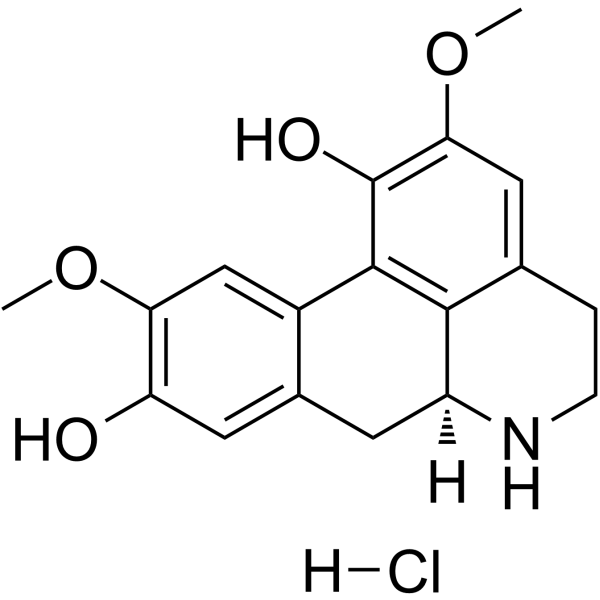 0 ImagesNorisoboldine hydrochloride is an orally active natural aryl hydrocarbon receptor (AhR) agonist. Norisoboldine hydrochloride, as a major isoquinoline alkaloid present in Radix Linderae, can be used for the research of Rheumatoid arthritis and Ulcerative colitis.
-
ANR94
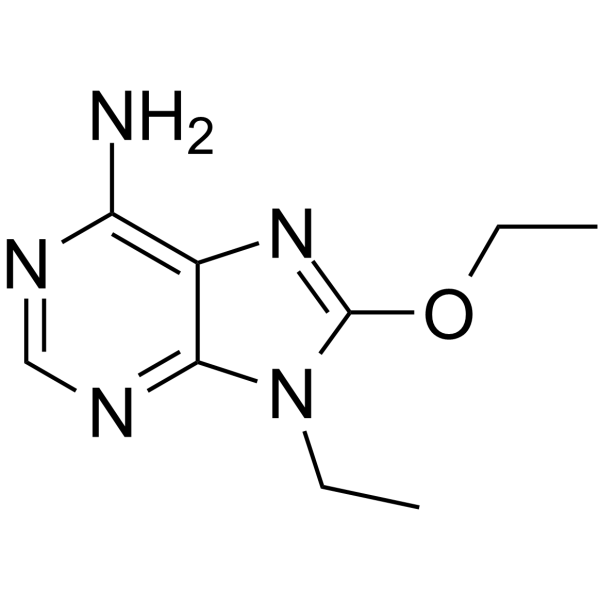 0 ImagesANR94 is a potent and selective adenosine A2A receptor (AA2AR) antagonist with an Ki of 46 nM for hAA2AR. ANR94 has the potential for the research of Parkinson's disease.
-
Apadenoson
 0 ImagesSynonyms: BMS 068645; DWH 146eApadenoson is an adenosine analog with selective agonist activity for the adenosine A2a receptor and induces coronary vasodilatation.
-
AB-MECA
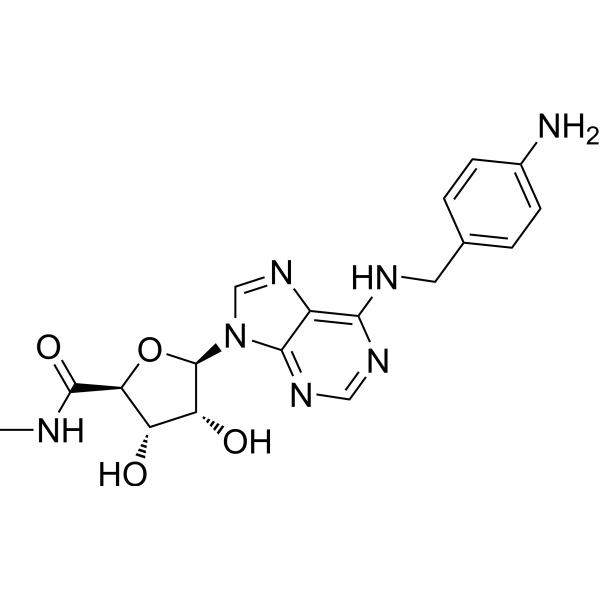 0 ImagesAB-MECA is a high affinity A3 adenosine receptor agonist with a binding Ki of 430.5 nM for human A3 receptors in CHO cells. AB-MECA can enhance plasma histamine level.
-
GS-9667
 0 ImagesSynonyms: CVT 3619GS-9667 (CVT 3619), a novel N6-5'-substituted adenosine analog, is a selective, partial agonist of the A1 adenosine receptor (A1AdoR). GS-9667 binds to adipocyte membranes with high (KH=14 nM) and low (KL=5.4 μM) affinities. GS-9667 reduces cyclic AMP content and release of nonesterified fatty acids from epididymal adipocytes with IC50 values of 6 nM and 44 nM, respectively. GS-9667 inhibits lipolysis and has the potential for Type 2 diabetes (T2DM) and dyslipidemia via lowering of free fatty acids (FFA).
-
N6,N6-Dimethyladenosine (Standard)
 0 ImagesN6,N6-Dimethyladenosine (Standard) is the analytical standard of N6,N6-Dimethyladenosine (HY-101984). This product is intended for research and analytical applications. N6,N6-Dimethyladenosine, a modified ribonucleoside, is an endogenous A3 adenosine receptor ligand. N6,N6-Dimethyladenosine is an AKT inhibitor with antitumor effects. N6, N6-Dimethyladenosine targets SARS-CoV-2 entry protein ADAM17. N6, N6-Dimethyladenosine robustly inhibits AKT signaling in a variety of non-small cell lung cancer cell lines.
-
Enprofylline
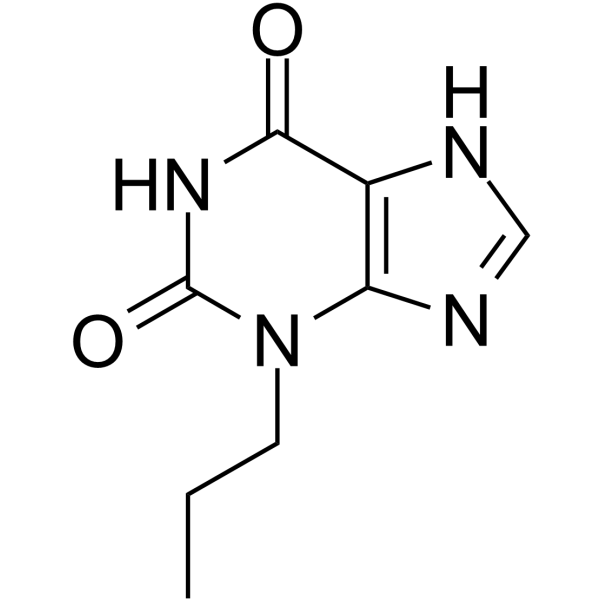 0 ImagesEnprofylline acts as a selective and competitive A2B receptor antagonist with the Ki of 7 μM. Enprofylline also acts as a phosphodiesterase inhibitor. Enprofylline can be used for the research of asthma, chronic obstructive pulmonary disease.
-
Adenosine monophosphate-13C10,15N5 dilithium
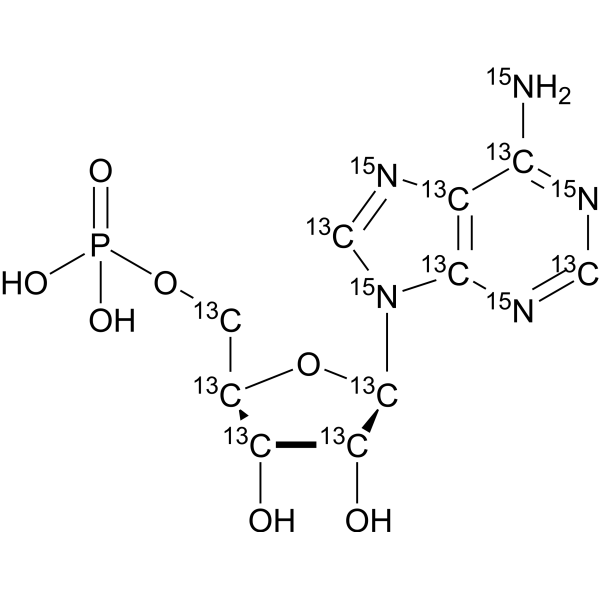 0 ImagesCat. No.: HY-A0181SPurity: 99.9%Synonyms: AMP-13C10,15N5 dilithiumAdenosine monophosphate-13C10,15N5(AMP-13C10,15N5) is the 13C-labeled and 15N-labeled Adenosine monophosphate (HY-A0181). Adenosine monophosphate is an adenosine A1 receptor agonist. Adenosine monophosphate has significant antiviral activity against HSV-1 and HSV-2. Adenosine monophosphate is a key cellular metabolite regulating energy homeostasis and signal transduction.
-
Adenosine amine congener
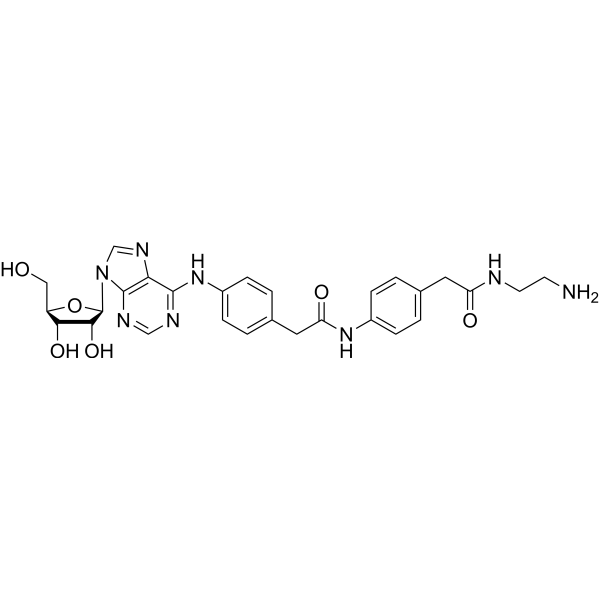 0 ImagesSynonyms: ADACAdenosine amine congener (ADAC) is a selective A1 adenosine receptor agonist, can ameliorate noise- and Cisplatin-induced cochlear injury. Adenosine amine congener also has neuroprotective effects.
-
Inosine-2,8-d2
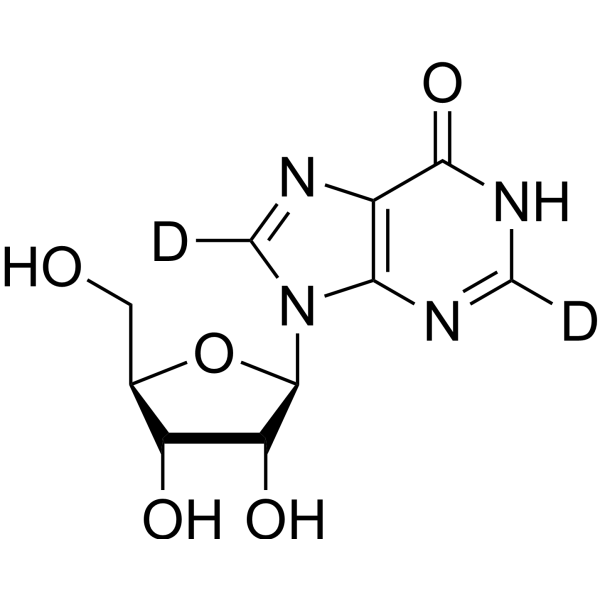 0 ImagesInosine-2,8-d2 is the deuterium labeled Inosine. Inosine is an endogenous purine nucleoside produced by catabolism of adenosine. Inosine has anti-inflammatory, antinociceptive, immunomodulatory and neuroprotective effects. Inosine is an agonist for adenosine A1 (A1R) and A2A (A2AR) receptors.
-
Vipadenant
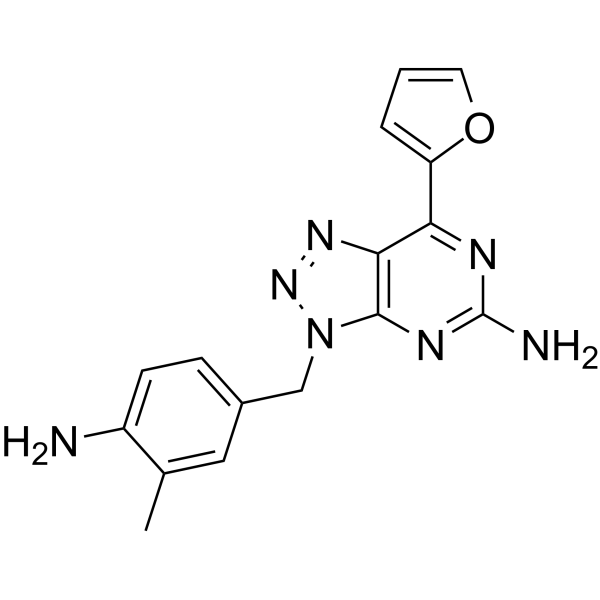 0 ImagesSynonyms: BIIB-014; CEB-4520Vipadenant (BIIB-014; CEB-4520) is an adenosine receptor antagonist, with Kis of 1.3 nM and 68 nM for A2A and A1, respectively.
-
MRS-3777 hemioxalate
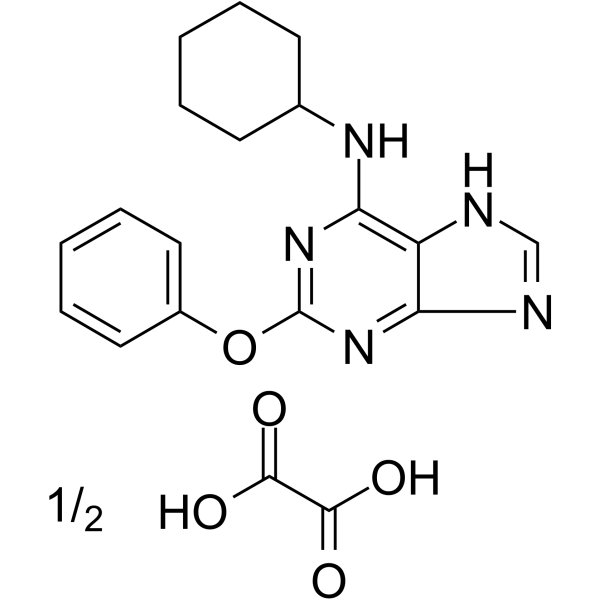 0 ImagesCat. No.: HY-110037CAS No.: 1186195-57-2MRS-3777 hemioxalate is a selective adenosine A3 receptor antagonist.
-
Sulcatone
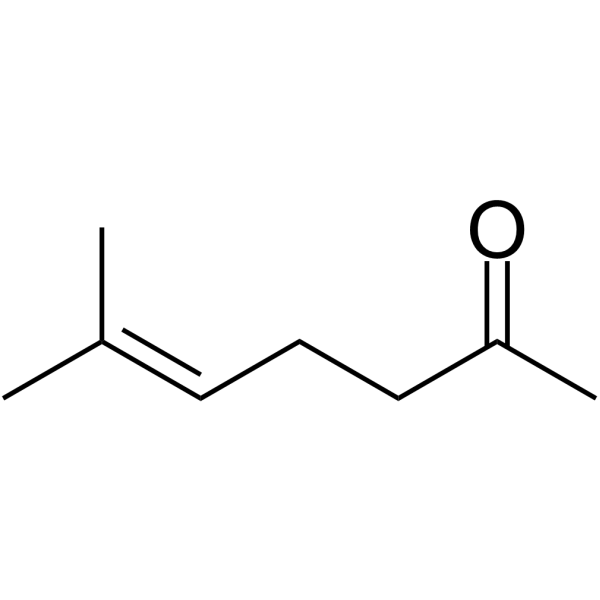 0 ImagesSynonyms: 6-Methyl-5-hepten-2-oneSulcatone (6-Methyl-5-hepten-2-one) is a plant-derived volatile organic compound with activities such as insecticidal, antifungal, and blood pressure-lowering effects. Sulcatone also serves as an insect pheromone and an endogenous metabolite, which can be found in feces. Changes in Sulcatone levels can be used for the auxiliary diagnosis of ulcerative colitis.
-
8-Chloro caffeine
 0 Images8-Chloro caffeine binds to adenosine receptors (Ki = 30 µM). 8-Chloro caffeine potentiates UV-induced chromosomal aberrations in Cl-I Chinese hamster embryonic lung cells. 8-Chloro caffeine is a derivative of the methylxanthine alkaloid caffeine.




